
Both CHESS-sponsored and custodial models work well for an SMSF. There is no material compliance or audit problem with either — SMSF auditors accept both. This article offers a practical comparison of CHESS vs Custodian SMSF investing in Shares & ETFs.
The differences most trustees actually notice:
- CHESS sponsorship usually means more paper mail from share registries, but gives your SMSF its own HIN and a clean, free broker-to-broker transfer if you ever move.
- Custodial platforms are often cheaper (Betashares Direct has $0 brokerage and easy auto-invest), and switching providers later is possible if CHESS sponsorship is preferred.
- Ownership and security exist in both models — your holdings stay yours and are identifiable and transferable in the unlikely event of the brokerage platform failing.
It mostly comes down to what helps you sleep at night versus what saves time and money. You can switch models later if your needs change. There is no single “right” answer for CHESS vs Custodian SMSF investing — only what fits your fund. If you want to skip the comparison and get set up, see our ASX SMSF investing solution.
Contents
- Quick ownership comparison
- How each model works for an SMSF
- Admin and reporting burden
- Security and what happens if a platform has problems
- Costs — the real driver for many smaller funds
- Corporate actions, voting and rights issues
- The ETF angle — is a second custodian layer redundant?
- What our recent SMSF clients actually chose
- So which should you pick?
- FAQs
1. Quick ownership comparison
| CHESS-sponsored (Selfwealth example) | Custodial (Betashares Direct example) | |
|---|---|---|
| Legal owner | The SMSF / trustee company | The licensed custodian (Citigroup Pty Ltd) |
| Beneficial owner | The SMSF | The SMSF (keeps all dividends, capital gains, etc.) |
| Registration | Own unique HIN on the ASX subregister, in the SMSF’s name | Pooled / omnibus account; platform tracks who owns what; statement of beneficial holdings instead of a HIN |
| Switching brokers | Free HIN transfer between CHESS brokers (no CGT event) | Partial or full transfers available, fee of up to $9.50 per security transferred |
CHESS-sponsored (Selfwealth): The SMSF (or trustee company) is the legal owner and beneficial owner. You get your own unique Holder Identification Number (HIN) on the ASX subregister, with direct registration in the SMSF’s name.
Custodial (Betashares Direct): The licensed custodian — Citigroup Pty Limited, per the Betashares Invest Financial Services Guide — is the legal owner. The SMSF is the beneficial owner and keeps all economic rights (dividends, capital gains, etc.). Holdings sit in a pooled/omnibus account and the platform maintains records to attribute assets to each client.
2. How each model works for an SMSF
CHESS-sponsored (Selfwealth): Shares are registered directly under the SMSF trustee or company trustee name with its own HIN. Standard CHESS sponsorship rules apply and the SMSF is on the official ASX record. This is one model behind Grow’s ASX SMSF investing solution, where preferred brokers ensure holdings are CHESS-sponsored and legally held in the name of your SMSF.
Custodial (Betashares Direct): The platform uses an independent licensed custodian (Citigroup). Your SMSF account is set up in the correct trustee name and you receive statements showing beneficial ownership. The structure is an ASIC-regulated, IDPS-like registered managed investment scheme, and the custodian must keep client assets separate from its own. You can see how this is set up in our guide to linking a Betashares Direct account.
Both are used successfully by thousands of SMSFs.
With Grow SMSF, you can choose between both Selfwealth and Betashares Direct. You can also have both!
3. Admin and reporting burden — what you will actually notice
From Grow’s perspective after helping hundreds of SMSFs, the day-to-day admin load is essentially the same.
- Both Selfwealth and Betashares Direct provide direct data feeds to us for accounting and audit (Betashares Direct feeds into Class via an authorisation process).
- ATO pre-fill concerns that individuals worry about do not apply to SMSFs — we pull data straight from the broker.
- Tax statements and CGT cost-base tracking work in both models.
The one consistent complaint we hear about CHESS-sponsored brokers is the volume of paper mail from share registries (Computershare, MUFG/Link, etc.). Even when you elect electronic delivery, you still get letters for address changes, email updates, corporate actions and so on. Custodial platforms generally eliminate this paperwork because there is no direct registry relationship at the holder level. The broker platform takes care of all that on your behalf.
Auditor impact
SMSF auditors accept both models. With a custodial platform they will often ask for the platform’s systems and controls report (a controls assurance report prepared by the platform’s own auditor). As CPA Australia’s guidance for SMSF auditors explains, where investments are held in the custodian’s name the auditor cannot verify the holding independently by searching a HIN on the share registry, so they rely on the service organisation’s controls report. If that report is not supplied, the auditor may add a Part A (financial) qualification noting reliance on the platform’s reports. This is not a compliance breach — it is simply disclosure that the SMSF auditor did not audit the platform itself.
4. Security and platform problems
This is the area that causes the most “sleep at night” worry. Both models have meaningful separation between your assets and the brokerage firm’s own balance sheet.
- CHESS: Your shares sit on the ASX subregister in the SMSF’s name. The broker is only the sponsor — it never owns your shares.
- Custodial: An independent licensed custodian holds legal title. Under ASIC rules custodians must hold client assets separately from their own, comply with strict capital and audit requirements, and report periodically to ASIC. Betashares Direct confirms each investor’s holdings are held on separate trust and are not part of Betashares’ or Citigroup’s own assets.
In either case, if the brokerage platform itself ran into serious trouble, your holdings would normally be identifiable and transferable to another broker or platform. There would be a period of restricted access while everything is sorted, but ownership itself is protected.
The historical horror stories — BBY and Halifax Investment Services — were not failures of the CHESS or independent-custodian models. In both cases the operator commingled client money and used it to fund its own operating losses, which made individual entitlements impossible to trace. The Halifax liquidation found roughly 98% of client funds were commingled, and a ~$19 million deficiency. Modern independent custody (assets ring-fenced at a major bank like Citigroup) and CHESS sponsorship (assets on the ASX subregister in your name) both specifically guard against that kind of mixing.
Bottom line: genuine loss of ownership is extremely unlikely in either model when you use a reputable, regulated provider. The difference is mostly psychological comfort versus documented process with CHESS vs Custodian SMSF.
5. Costs — often the deciding factor for smaller investments
This is where custodial platforms frequently win for SMSFs.
- Betashares Direct: $0 brokerage on all ASX-traded ETFs and 400+ ASX shares, plus easy automatic investment plans (AutoPilot). No brokerage and no account fees on individual holdings — only optional Managed/Custom Portfolio fees apply if you use AutoPilot portfolios. Very attractive when you are drip-feeding or making smaller regular purchases such as dollar-cost averaging (DCA).
- Selfwealth: a flat $9.50 brokerage per ASX trade (CHESS-sponsored). Competitive and predictable, but not zero. The same $9.50 flat fee applies to US trades, albeit in USD.
For many SMSFs that buy ETFs in modest amounts, the brokerage saving adds up. Over time the difference can be material, especially once you factor in no CHESS-related fees on the custodial side.
International access often pushes people toward Selfwealth anyway (it covers ASX, US and Hong Kong via one account), even if they would otherwise lean custodial for pure ASX. For full global exposure, some clients instead use Interactive Brokers (IBKR) for their SMSF. You can compare all of Grow’s preferred brokers and fees on our ASX SMSF page.
Regardless of the platform used, the most important aspect is what you actually invest in. CHESS vs Custodian SMSF investment brokerage account choice is less relevant.
6. Corporate actions, voting, rights issues and preferences
Differences exist but are rarely material for most SMSFs.
- Dividends and distributions: Both models pass these through correctly.
- Rights issues and preference offers: Usually offered in both. With custodial you deal through the platform; with CHESS you may receive communications directly from the registry.
- Voting rights: Possible under CHESS (you are the registered holder). Under custodial the platform or custodian typically handles or passes through instructions. Most SMSFs do not exercise voting rights anyway.
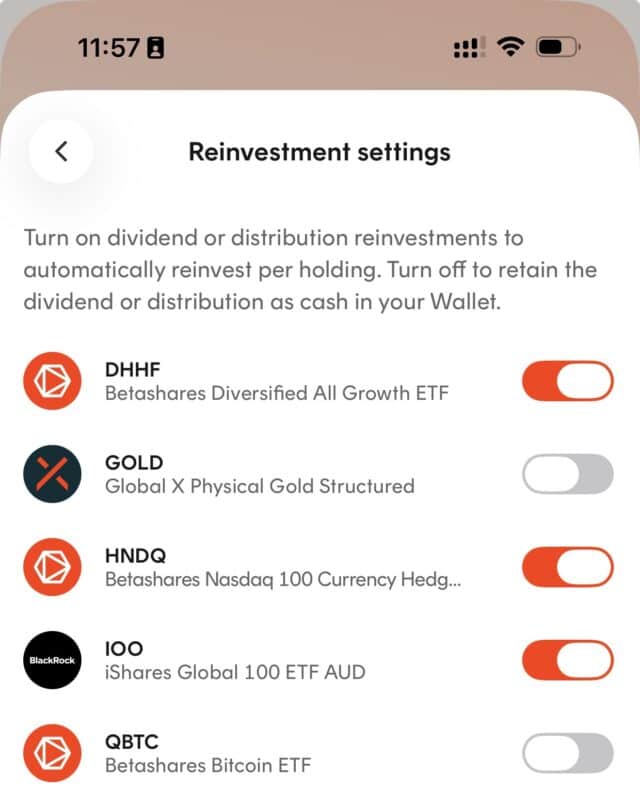
- DRPs and other actions: Generally available in both; check the specific platform’s policy. Betashares Direct enables DRP.
7. The ETF angle — is the extra custodian layer redundant?
Many SMSF investors hold ETFs. Inside every ETF the underlying shares are already held by a custodian on behalf of the fund (for Betashares’ own ETFs, that custodian is also Citigroup). Adding another custodial layer at the unit-holder level (Betashares Direct) does not create meaningful extra risk for most people — you are already one step removed from the actual companies by the design of the ETF structure itself.
This is why some trustees are comfortable with custodial models for ETF-heavy portfolios: the “extra” layer is largely already there. If diversification across asset classes matters to you, see our note on SMSF diversification and investment strategy.
8. What our recent SMSF clients actually chose
Over the last five months, based on the new customers who opened an SMSF with Grow intending to invest in ASX shares/ETFs:
- 70% chose Selfwealth (CHESS-sponsored)
- 30% chose Betashares Direct (custodial)
The split is not purely about CHESS versus custodian. Selfwealth also gives easy access to the US market, which is popular — many people simply want one platform that handles both ASX and international without extra accounts. The numbers show both models are being chosen in real life; there is clearly no single “correct” option for CHESS vs Custodian SMSF.
9. So which should your SMSF choose?
Use CHESS-sponsored (Selfwealth style) if you value:
- The feeling of direct legal ownership on the ASX register, with your own HIN.
- A clean, free HIN transfer if you ever want to move brokers (no forced sell-down, no CGT event).
- Built-in access to US (and Hong Kong) markets from the one account.
- You are happy to deal with more registry mail.
Use custodial (Betashares Direct style) if you value:
- Lower (or zero) brokerage and easier small / automatic investments.
- Simpler day-to-day admin and less paper.
- An ASX/ETF-focused portfolio where one platform does the job.
- You are comfortable with a well-regulated independent custodian and accept that switching providers later may mean selling down.
You can switch later if your view changes — transfers are possible in both directions, though expect some cost and a short period of restricted access. There is no CGT event or capital gains tax triggered when moving between HIN and custodial platforms as the SMSF beneficial ownership doesn’t change.
The only wrong answer is choosing something that keeps you awake at night worrying about it. Most SMSF trustees end up perfectly happy with either once they understand the practical reality.
10. CHESS vs Custodian SMSF FAQs
Does my SMSF auditor have a problem with custodial platforms?
No. Both models are accepted. Custodial platforms may require an extra systems and controls report from the platform’s auditor. If it is not provided, the SMSF auditor may add a Part A qualification to their audit report. This is disclosure only, not a compliance breach.
Will I lose my shares if the brokerage platform goes broke?
Extremely unlikely in either model with a reputable provider. Both CHESS sponsorship and independent custody create separation between your assets and the operator. Holdings are normally identifiable and transferable, though you may have temporary restricted access during a transition. The Halifax and BBY collapses were caused by commingling and misuse of client money, not by the CHESS or independent-custodian models themselves.
Is there more paperwork with CHESS?
Yes — this is the most common practical complaint. Share registries still send physical letters even when you select electronic delivery, especially for address or detail changes.
Are tax reports and ATO data the same?
For SMSFs, yes. We receive direct data feeds from both Selfwealth and Betashares Direct. Individual pre-fill concerns do not apply to your fund.
What about corporate actions and voting?
Both models handle dividends and most corporate actions. Voting rights are more direct under CHESS but rarely exercised by SMSFs. Check the specific platform for rights issues or DRPs. Betashares Direct supports dividend/distribution reinvestment plans.
Can I change my mind later?
Yes. You can move between CHESS-sponsored and custodial platforms. Moving between two CHESS brokers is usually a free HIN transfer. Leaving a custodial platform may require some small transfer fees and expect a short period where trading or access is limited while the transfer completes.
Is one model “safer” for SMSFs?
Both are safe when using regulated providers. CHESS gives direct ASX registration in your SMSF’s name; custodial uses an independent licensed custodian (Citigroup for Betashares Direct) with strict segregation requirements. For most trustees the difference is psychological comfort rather than documented extra protection.
Do I get a HIN with Betashares Direct?
No. Because Betashares Direct uses a custodian model, there is no personal HIN — you receive a statement of beneficial holdings instead. Selfwealth, being CHESS-sponsored, does issue your SMSF its own HIN. This is a key difference with CHESS vs Custodian SMSF.
Ready to decide or want help setting up either option?
We support both Selfwealth (CHESS) and Betashares Direct (custodial) for SMSFs, plus IBKR for global investing, and can walk you through the practical steps for your situation.
There is no one-size-fits-all — we help you pick what actually fits your fund and your peace of mind. Explore our ASX SMSF solution or start your SMSF setup. Thank you for reading our article on CHESS vs Custodian SMSF.
This article is general information only and does not take into account your personal objectives, financial situation or needs. Please read our advice disclaimer before acting on any information.
